A shopping cart rolls into your door at the store. A hailstorm leaves dimples across the hood. A ball from the neighbor’s yard puts a dent in the fender. The damage is small, but the question is big: do you need a full body shop repair with filler and fresh paint, or can the dent simply be pushed back out?
That second option is called paintless dent repair, or PDR. Here’s how it works, when it’s the right call, and when it isn’t.
What paintless dent repair actually is
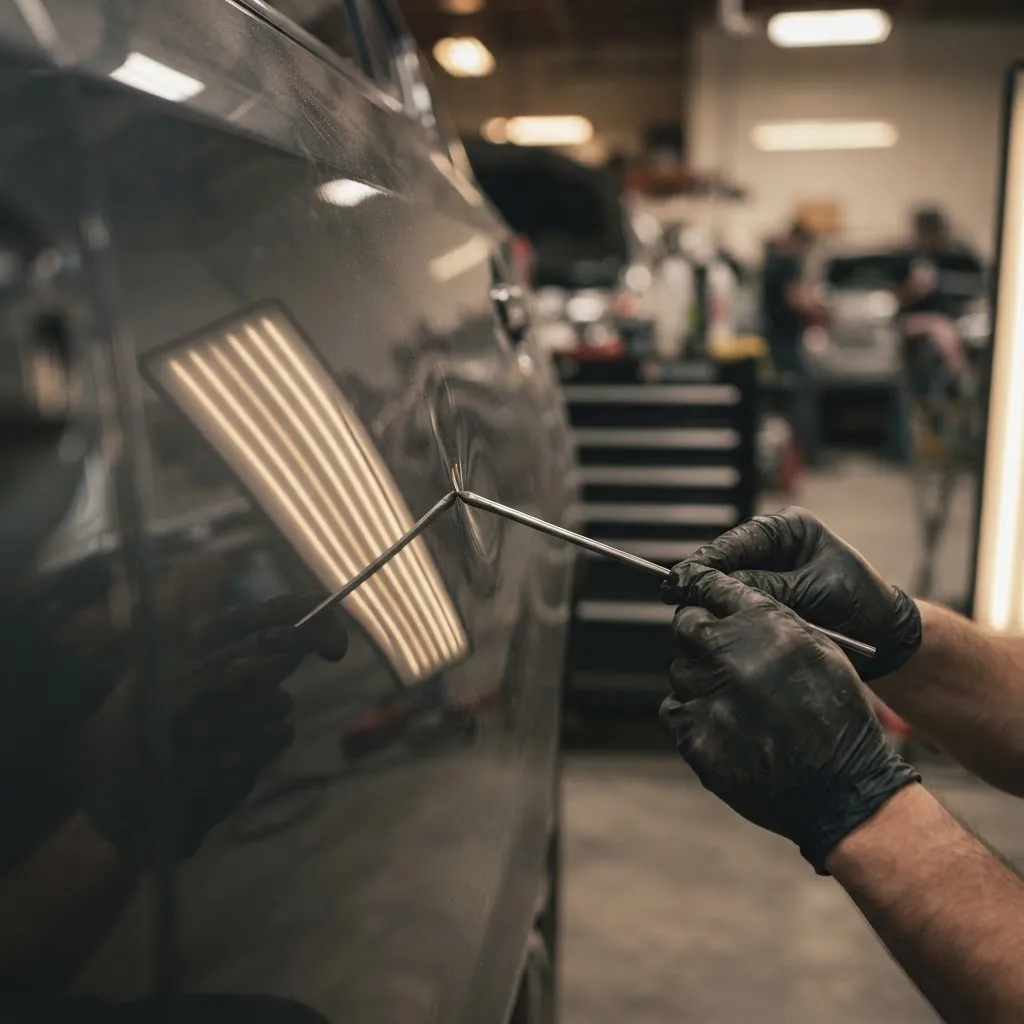
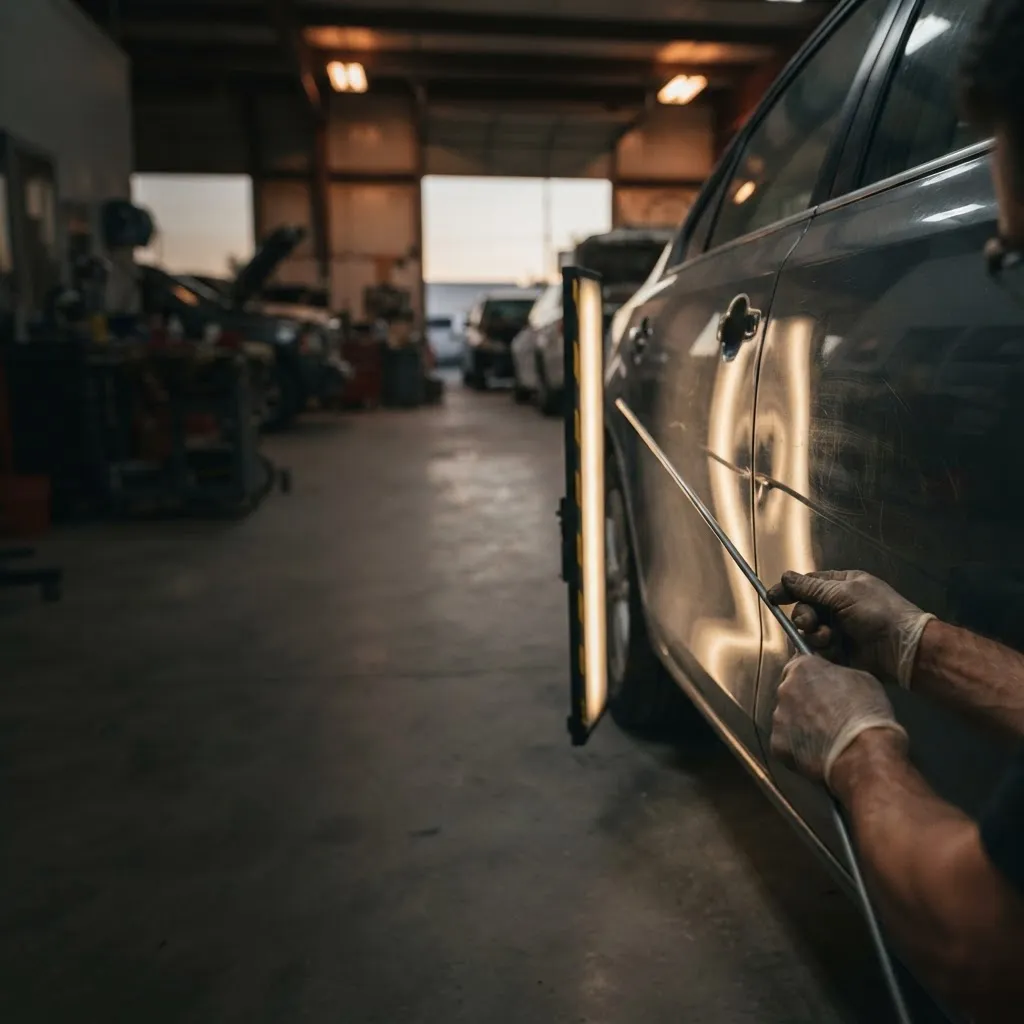
PDR is a technique for working a dent out of a panel from behind, using specialized rods and tools to slowly massage the metal back to its original shape. On panels that can’t be reached from behind, technicians may use glue tabs to pull the dent from the outside. Nothing is sanded, filled or repainted, so the vehicle keeps its original factory finish (Plymouth Rock’s overview of paintless dent repair explains the basic method).
It takes skill and patience. A good PDR repair leaves the panel looking like nothing ever happened. A rushed one can leave high spots, ripples or cracked paint.
When PDR is usually the better choice
- The paint isn’t broken. If there’s no chip, crack or flaking in the paint, PDR may be possible.
- The dent is shallow and smooth. Round, soft dents and door dings respond well.
- The metal isn’t stretched. Sharp creases and deep impacts stretch the metal, which makes it hard to return to its original shape without conventional work.
- The technician can reach it. Dents on body lines or near panel edges and braces can be harder, though not always impossible.
- It’s hail damage. Hail tends to leave many shallow dents with the paint intact, which is often a good fit for PDR.
Why keeping the factory paint matters
Factory paint is applied and cured under conditions a body shop can’t fully recreate. A refinish done well can look excellent, but an undisturbed factory finish is still the original, and it means one less repaired panel to explain when you sell or trade the vehicle. PDR also tends to be faster, since there’s no filler to cure and no paint to blend into the panels next to it.
When you need conventional dent repair instead
PDR isn’t right for every dent, and any shop that says otherwise isn’t being straight with you. Conventional repair, meaning metal work, filler where needed, primer and refinishing, is the better path when:
- The paint is cracked, chipped or scraped down to primer or bare metal
- The dent has a sharp crease or the metal is visibly stretched
- The panel was previously repaired with filler
- The damage is part of a larger collision, with bumpers, lights or structure involved
In those cases, trying to force PDR can make things worse. At Legacy Collision Center we’ll look at the dent, tell you honestly which method fits and walk you through the alternative if PDR won’t hold up. Our paintless dent repair and bumper and cosmetic repair work are both done in the same shop, so you get the right repair, not just the one a shop happens to offer.
How to tell if your dent is a candidate
Take a few photos of the dent in good daylight: one straight on, one from a low angle along the panel so the shape of the dent shows, and one close-up of the paint. Then request a free estimate and attach them. A real person reviews the photos and gives you a first opinion before you bring the vehicle to our shop on Monroe Road in Farmington.
Frequently asked questions
Is paintless dent repair permanent?
Yes. When it’s done correctly, the metal is returned to its original shape and the dent doesn’t come back on its own.
Can paintless dent repair fix hail damage?
Often, yes. Hail usually leaves shallow dents with the paint intact, which is a good fit for PDR. Very large or sharp hail dents, or dents with cracked paint, may need conventional repair.
Does PDR work on plastic bumpers?
PDR is mainly for metal panels. Plastic bumper covers are usually repaired with heat, plastic repair and refinishing instead.
Is PDR cheaper than traditional dent repair?
For dents that qualify, it often costs less because there’s no filler, primer or paint involved. The best way to know is an estimate based on your specific damage.
How do I find out if my dent qualifies?
Send clear photos with a free estimate request through our website, or call Legacy Collision Center at (505) 419-8248.
Written by the team at Legacy Collision Center, 3900 Monroe Road, Farmington, NM 87401. Questions about your vehicle? Call (505) 419-8248 or request a free estimate.